Does the music we exercise to really matter? According to an article in the NY times and a study published last year, it really does matter. Participants rode a stationary bicycle at a pace they felt was comfortable enough to maintain for thirty minutes for three separate rides. On each ride the same six songs were played but on each ride the tempo of the songs changed, either slower or faster than the original tempo without the riders knowing it. As you can imagine when the tempo slowed so did their pedaling, mileage, heart rate and even their level of enjoyment for the song. When the tempo speed increased; their speed, mileage and heart rate increased. Surprisingly their level of enjoyment for the music, the same music, increased. Unfortunately the tempo of the music didn’t change the comfort level of the exercise. But it did seem to motivate participants to push harder and go faster. The article in the NY Times states that multiple experiments have found that your body responds to the beat of the music, which results in you moving faster or pushing yourself harder. Our bodies want to synchronize to the music we listen to. We naturally want to tap our feet or sway to the beat when we hear music. Take advantage of this phenomenon and let it help you increase the tempo of your workout. So next time you plan for a run, load up your playlist with some up tempo Justin Bieber and leave the Jack Johnson behind. Our bodies are made to move to the music. So let’s move.
NY Times article referenced is titled: Phys Ed: Does Music Make You Exercise Harder? By Gretchen Reynolds.
Check out this link to find all the parks and amenities in your zip code!
http://gethealthyclarkcounty.org/chronic_disease/ptp_home.html
The summer is slipping away at a rapid pace and if you have kids or you are a teacher , that leaves you thinking about the coming school year. There is always a lot to be done when it comes to getting your child ready for the upcoming school year and you might feel the last thing you have time to worry about is packing healthy school lunches. Kids get bored of the same old thing so here are some ideas for how you can mix up lunch. Food is art….so let’s get creative!
Try PB Spirals. Take a whole wheat tortilla, spread on some peanut butter and add sliced banana. Drizzle a little honey. Roll the tortilla and cut into bit size pieces.
Take chunks of chicken, add a little BBQ sauce, fill whole wheat bun with BBQ chicken.
Bored of a regular sandwich, try a wrap. Add turkey, lettuce and tomatoes to a whole wheat tortilla. Roll tortilla and cut in half.
Try a handful of whole-wheat crackers with four one-inch cubes of low-fat cheddar or Swiss cheese, a serving (about a third of a cup) of egg salad made with a hard-boiled egg and a tablespoon of regular mayonnaise, and a cup of reduced-sodium V-8 juice.
For sides to go with these items try cups of fruit, celery sticks, baby carrots, or string cheese.
The Healthy, Hunger- Free Kids Act of 2010 PASSED and achieved a rare, bipartisan consensus on the senate floor! We would like to thank all of you who contacted Senator Reid and showed your support. Your efforts were heard! You can look forward to healthier school lunches for our children and eventually the removal of junk food from school vending machines. This is a huge step forward to changing the health of our future!
We know we’re supposed to get moving…walk, bike, run, swim, and play! But what about muscle-strengthening activities? What does that even mean? It means exercising your muscles against a resistance. This resistance could come from lifting weights or from your own body weight such as doing pushups or leg squats. Without muscle-strengthening activities in your workout plan, you start to lose muscle and bone density in your older age. Strength training can stop bone density loss and rebuild some lost muscle. The earlier you start to focus on strengthening your muscles the better! Do muscle-strengthening activities at least twice a week.
Some examples of strength training activities include:
• Lifting weights
• Working with resistance bands
• Doing exercises that use your body weight for resistance (i.e., pushups, sit ups)
• Heavy gardening (i.e., digging, shoveling)
• Yoga
It is BBQ season and grilling is in the air! Check out Mary Wilson, RD and her tips on healthier meat choices at the grocery store.
http://il.youtube.com/user/SNHealthDistrict#p/u/17/Hi6v5KOLzG8
1.Look up when on the treadmill. Avoid looking down while running on a treadmill. You may end up tripping or straining your neck. Focus your eyes on something at eye level like the display monitor.
2. Avoid leaning on the handlebars of the stair climber or elliptical machine. Stand with your chest high and your head and spine aligned. If you are on a machine with handles, hold them so your hands are below shoulder level.
3. Use foot straps when cycling. This will help you push and pull the pedals properly. Your lower body really can benefit from the pulling up on the pedals motion. When you are pushing with your left foot, your right should be pulling up.
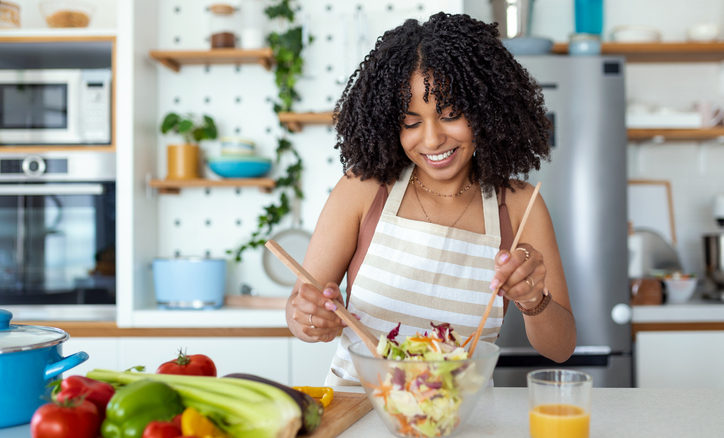
You have determined that you need to start eating healthier and you know that means more fruits and veggies….but how? Many times before you have made this pact with yourself to start eating better but for whatever reason it never quite happened. What can you do different this time around? Here are a few simple ideas:
1. Buy fruits and veggies. If they are not in your fridge or pantry there is no way they can make it to your mouth. The first step to eating right is having the right tools. Those tools are fruits and veggies. Put them in your shopping cart. Buy them when you go out to eat. Select items that incorporate fruits and veggies. Choose a salad. Add extra veggie toppings. Substitute for the cup of fruit. If you buy it, you are more likely to eat it.
2. Buy what you like. Select fruits or veggies that you like to eat, not ones that you think you should eat. If you don’t like blueberries but you buy them because you heard they are super healthy, you will most likely not eat them or hate every bite. There are so many varieties of fruits and veggies so buy the ones you like because you will enjoy eating them.
3. Have a plan. Fruits and veggies are not going to automatically make their way into your lunch sack or dinner plans. Plan for when you can use them and how. Add them to your lunch, make a fruit smoothie in the morning, add veggies to your pizza or sandwhich. There are so many ways to incorporate them into your day!
Sometimes we feel if we’ve not eaten a whole garden that day, then we have not eaten healthy. Which is unrealistic and untrue. Give yourself some credit! If you even ate one more fruit or veggie that day than you normally would have; feel good about that! Buy what you like and make a plan and then count it as a success when you have followed through!
To learn more about how to incorporate fruit and veggies in your diet check out our Nutrition Challenge at www.gethealthyclarkcounty.org
Perhaps you have been waking up early to fit in your morning walk for the past few weeks. You are feeling great about your effort and anticipate seeing real results this time. You are excited to jump on the scale and see your progress! You anticipate all your hard work paying off in pounds shed but after seeing the scale you quickly become discouraged seeing that the scale has not budged very much. Do not despair! Keep in mind that you do loose fat during the first few weeks of working out but that you are also building muscle at the same time. Especially if you are doing any strength training exercises. The lean stuff is more dense and takes us less space than fat so you will probably lose inches before you drop weight. Try measuring your progress instead of weighing yourself. Every week record the circumference of your waist, hips, and chest. Seeing those digits go down will keep you motivated and show you that your hard work does pay off!